|


|
|
|
The first CDC flies in SwitzerlandThe flies of the 401-424 series are the first documented CDC (cul de canard) flies in Switzerland. Based on their position in the Mouches de Vallorbe fly book, they must have been tied for the first time around 1924. Charles Bickel was experimenting with all kinds of feathers at that time. | ||

Sales cardboard for the Bickel CDC 401-424 (original- not for sale) Big image/ Zoom Replica of the original fly chart from the first CDC flies – Mouches de Vallorbe (1924)Faithful reproduction of the Mouches de Vallorbe/Bickel CDC 1924 fly chart The 24 flies, recreated on historic hooks using the original materials, are individually sewn onto a high-quality reprint of the original fly chart A beautiful piece for collectors and as wall decoration in your fly fishing club. It looks best in a matching recessed wooden frame. For those who like to remake the flies on their own: Empty high quality reprint/ cardboard of the flychart available. Any proceeds from the sale will be used in their entirety to preserve Switzerland’s cultural fly fishing heritage.
| ||
Description of the CDC Bickel flies numbers 401-418 in 1924
Translation of french fly tying terms
When describing the flies of the Bickel CDC, reference is often made to other flies. There is also a 200 series with the same bodies, but the main difference is the type of feathers used. The 400 series feathers are described as "ailes grasses de la queue du canard (about like "fat duck tail wings")" | ||
Making of the CDC Bickel flies numbers 419-424 in 1924
Translation of french fly tying terms
The CDC 419-426 were described later in the same year in Bickel's catalog and sewn in as originals. To establish the sales board for the Bickel CDC 401-424, some numbers were changed. For the detailed description below, we use the numbers of the sales board. | ||
|
You do not need a lot to remake these flies. We recommend the Swissflies hook SFS , waxed thread 8/0 in the indicated colors. For the body you use according to the pattern peacock quill, different silk threads, wool, floss, Dubbings or Rafia (SwissR). The CDC feathers must be natural fine and small, in natural colors.
| ||
How to make a Bickel CDC flyThe Bickel CDC flies have a very simple design.
Making of Bickel CDC 401 - tying video by Stefan Wenger
| ||
Bickel toolTo cut the CDC to the right length, you best use the wooden Bickel tool | ||
 Bickel Tool |
It is simple to use a small tube (Bickel tool) into which the fly is inserted head first. the backward CDC fibers are then cut off at the height of the hook arch. Available in different sizes (adapted to hook size) or as set of all 3 sizes | |
Detailed description of the flies | ||
| Only if talented fly tiers of today tie and flyfishermen fish the successful patterns of yesterday, this unique cultural heritage can be preserved from destruction and oblivion. Swissflies offers remakes with original materials but tied on modern barbless hooks Copyright Swissflies - Swiss historical flies. Any commercial use of texts, pictures, names or remake of the flies presented herein is forbidden without the written permission of Swissflies, the holder of all rights.
Fly names: Bickel CDC flies were sold in packs of a dozen; at the water's edge, either the number or the colour or a local name was used to discuss the most effective fly with other anglers.
To enlarge: click on the image
| ||

| Bickel 401: Passepartout The first CDC fly ever described worldwide. And actually, no others would have been needed — the 401 in various sizes catches everything- always! Black or brown fine thread, body stripped peacock herls quill, CDC natural grey- brown | |

| Bickel 402: Passepartout clair Black or brown fine thread, body peacock eye quill, bleached, CDC natural grey Same area of use as the 401, but thanks to its brighter peacock feather quill body, it also works very well as a midge pattern for trout in summer and in autumn for grayling. | |

| Bickel 403: La Grise rude - Rough grey Black or dark brown tying thread. Body fine grey wool or rabbitdubbing grey natural, CDC natural grey Can be used in the same way as the 404, but becomes slightly darker when wet, which can actually - depending on the hatch - be more attractive . | |

| Bickel 404: La Grise Black or brown fine thread, body grey floss, CDC natural grey- brown The 404 is the classic grayling fly in the series. Unbeatable in autumn fog, excellent on slow-flowing stretches. | |

| Bickel 405: Rouge de vin Thread/ body wine red floss, CDC natural grey- brown The wine-red Bickel is a typical late summer fly, also convincing in full sunshine on difficult fish. | |
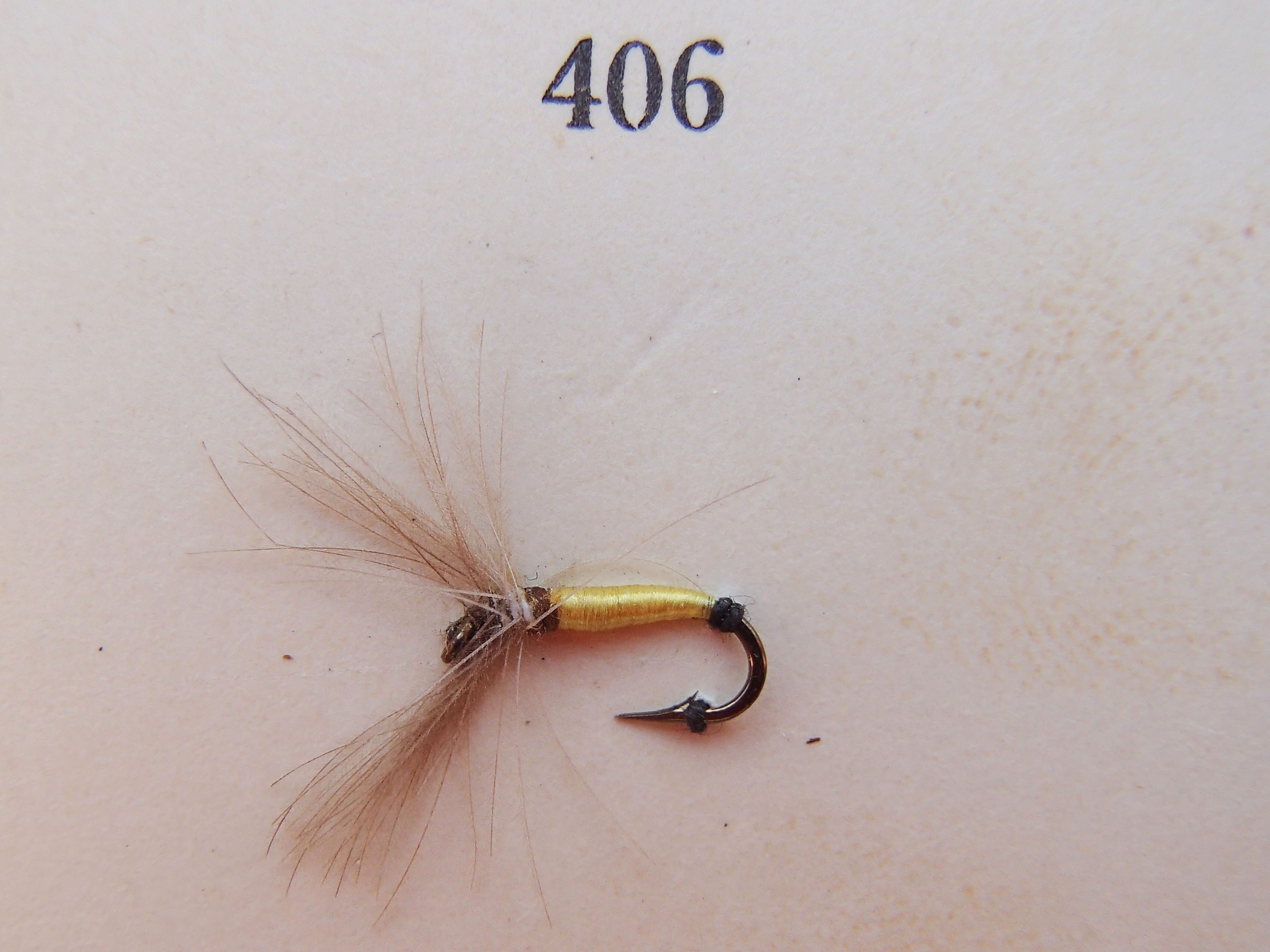
| Bickel 406: La petite jaune- The small Yellow Light brown tying thread, body Floss light yellow, natural CDC feathers grey The 406 perfectly imitates small yellow mayflies and is ideal for slow-flowing stretches. | |

| Bickel 407: THE Bickel BWO Thread grey - beige, body silk thread light olive (Zwicky Iris 597 or 598), CDC natural grey- bluedun The 407 is successful when the Blue winged olives are flying, i.e. from April until the end of June. And then in autumn it is excellent for grayling. | |
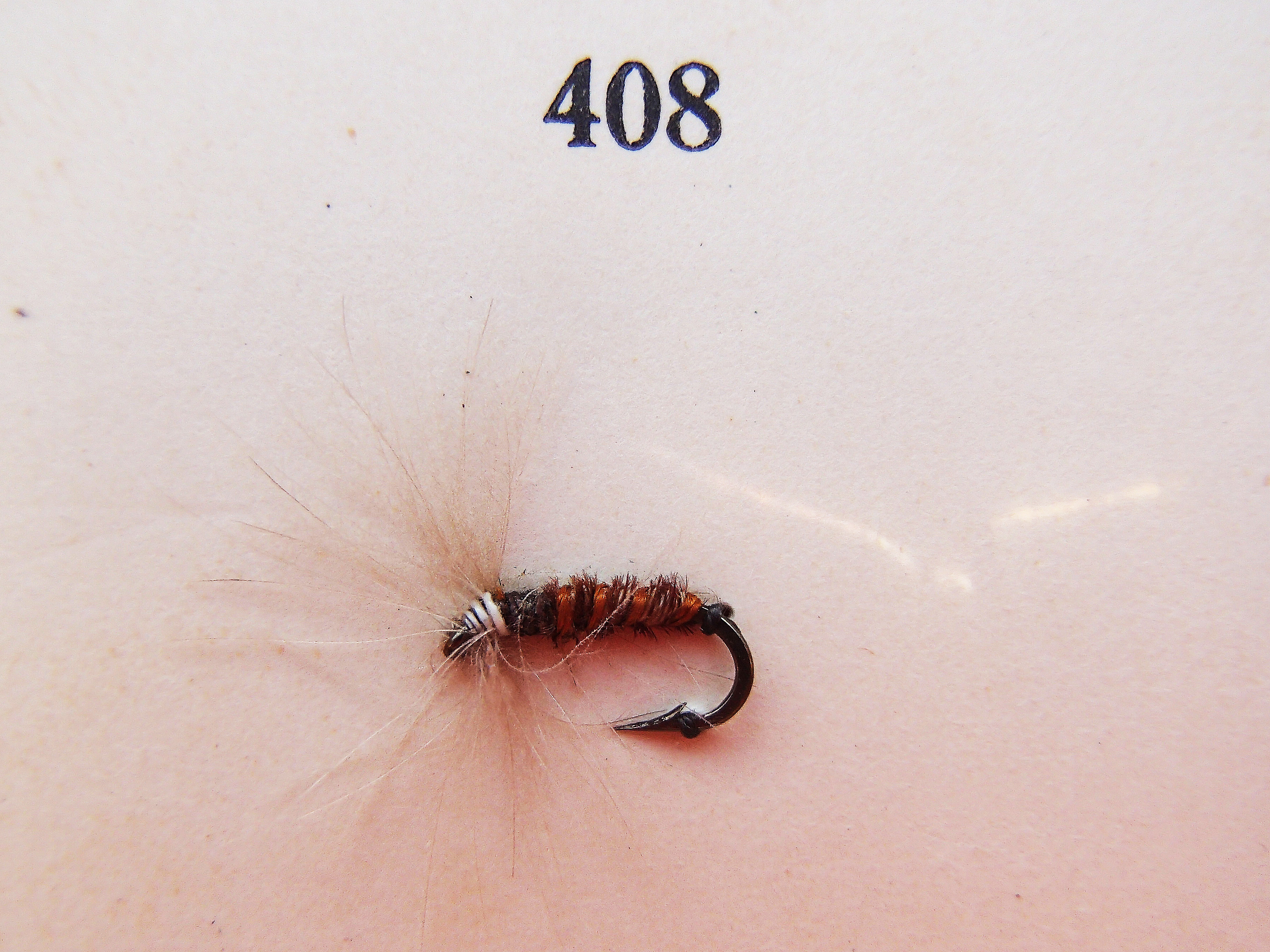
| Bickel 408: Pheasant CDC Black tying thread, body made of pheasant tail fibres, brown ribbed Natural - CDC feathers brown-grey Imitates brown mayflies and small beetles very well. | |
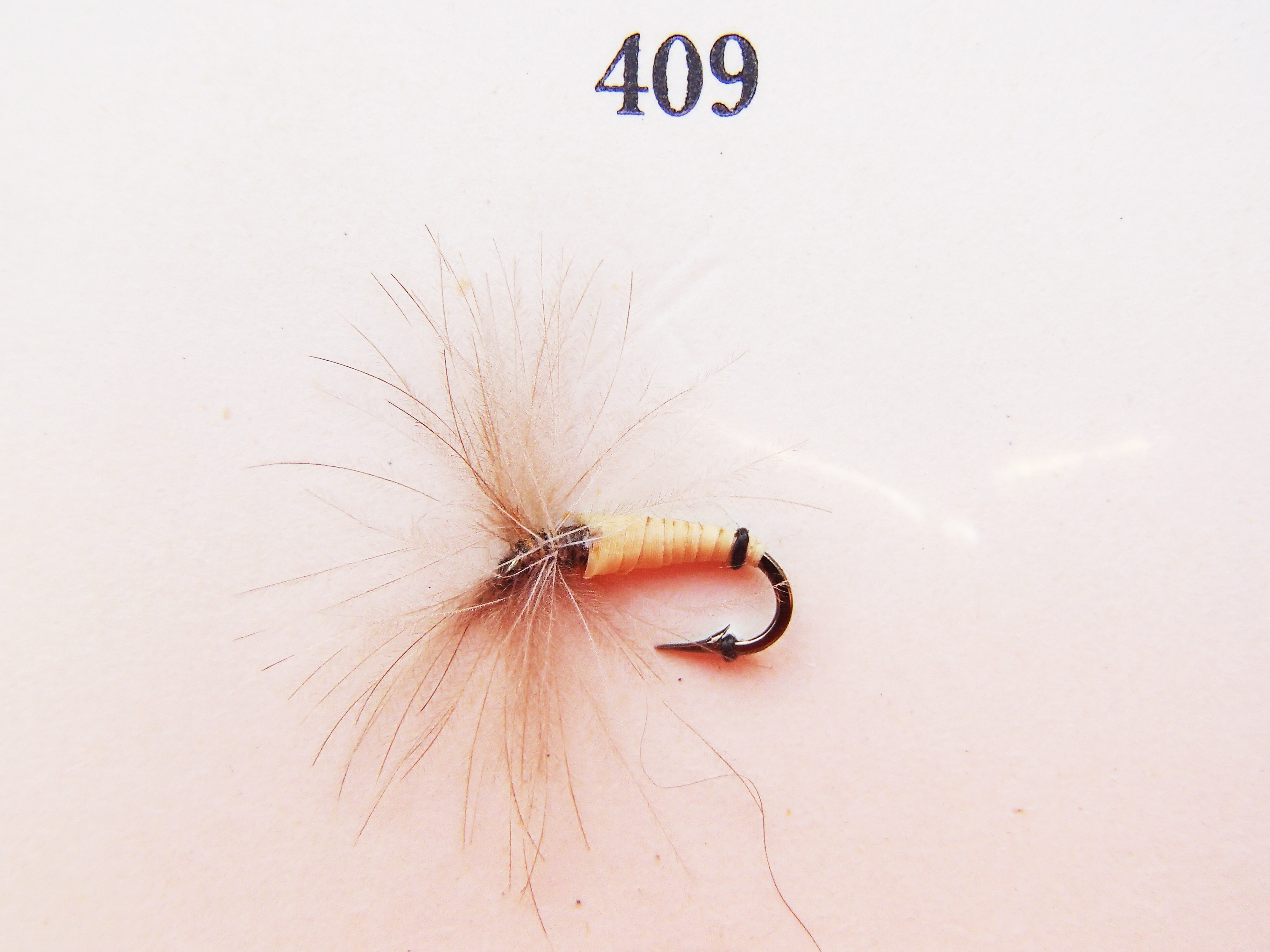
| Bickel 409: Asticot - (Maggots) CDC Brown thread, thick body made of raffia natural, natural CDC feathers beige. Unbeatable in midsummer in built-up areas – ideal for drains, when rubbish was still thrown into the water. Still effective today for chub and white fish. | |
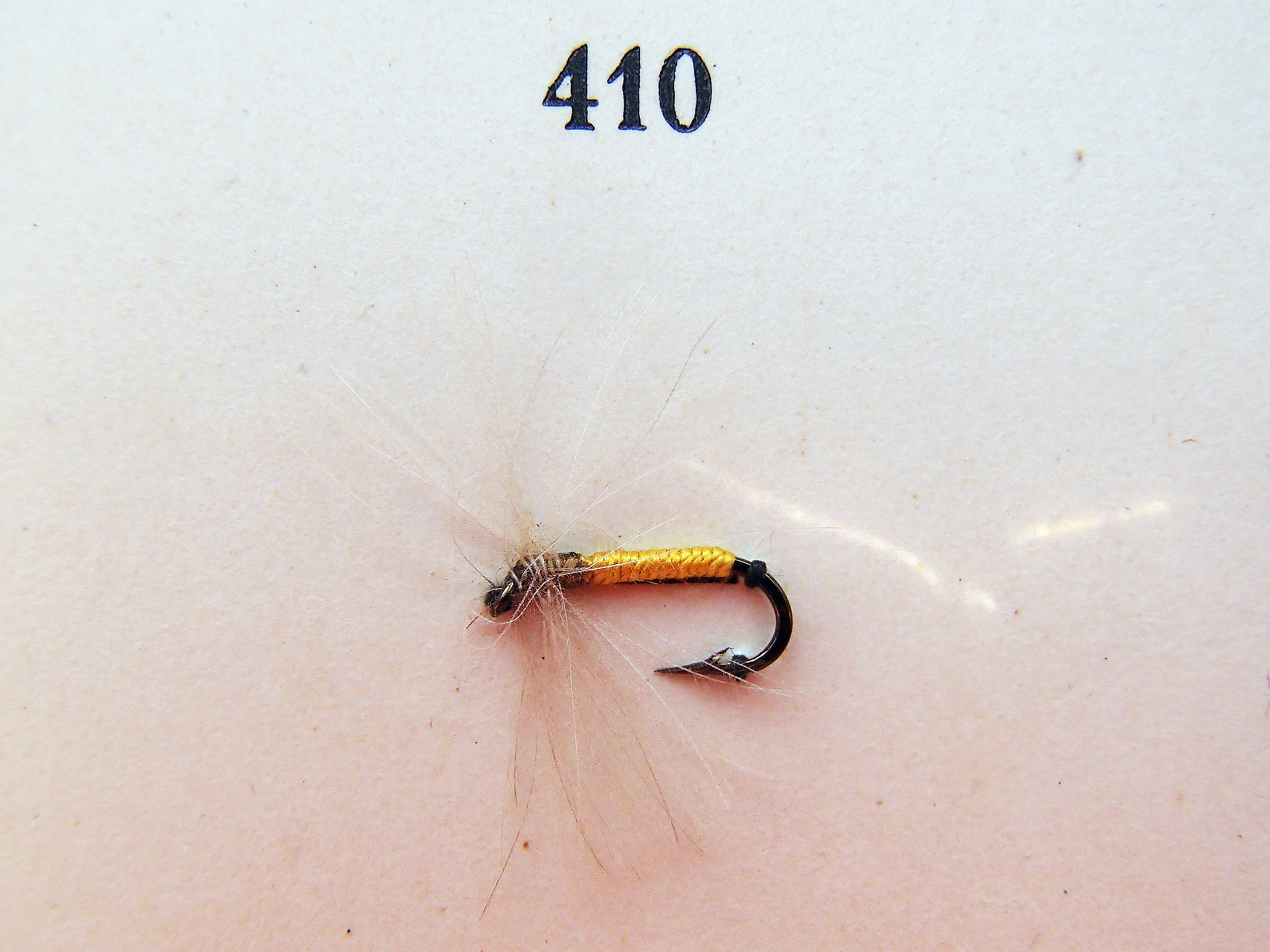
| Bickel 410: The golden Yellow Light brown tying thread, golden yellow yarn body, natural CDC feathers beige-dun. An absolute treasure on the fly rod, especially in August and September. Also effective during the day, even in intense heat. | |
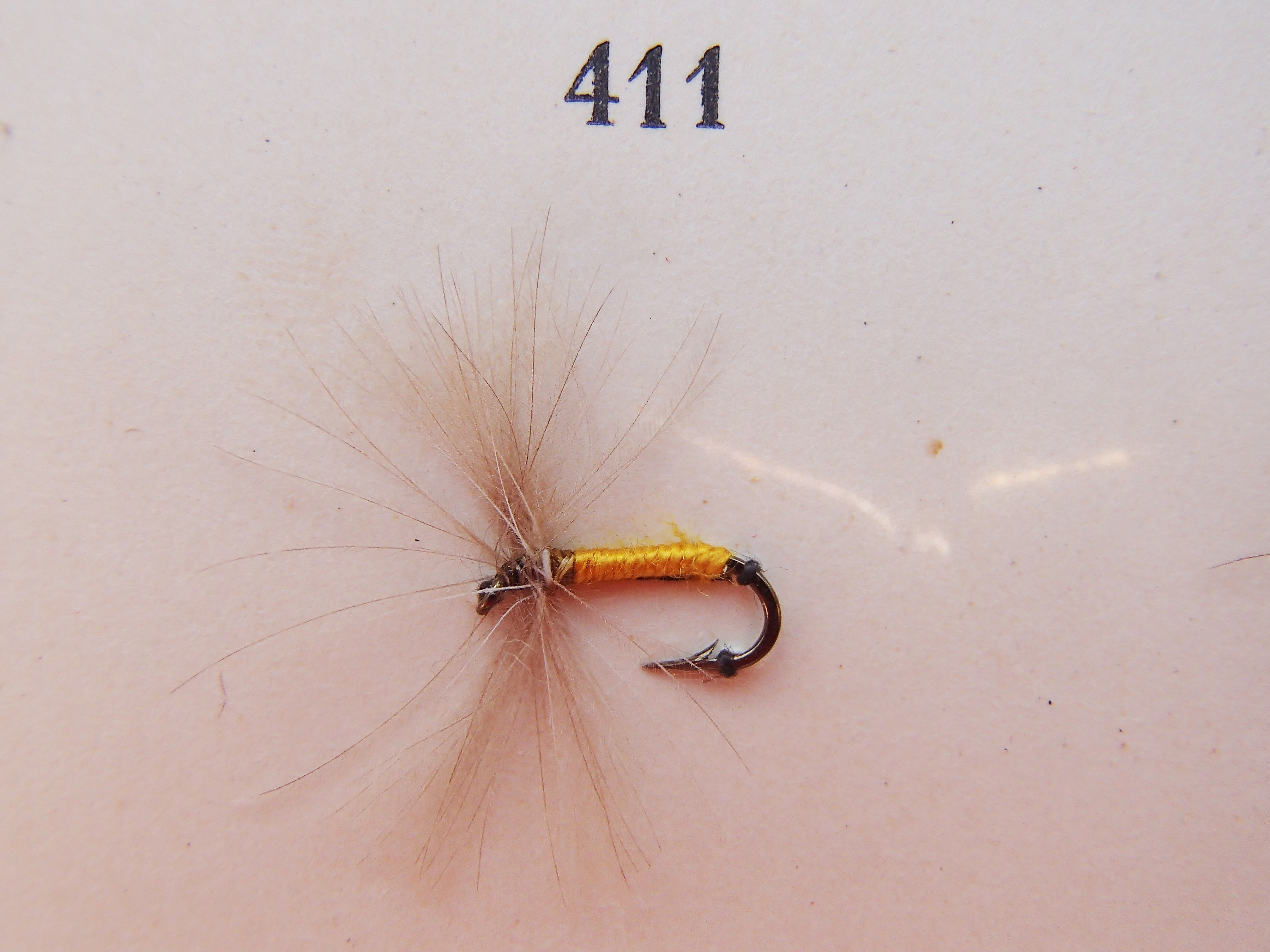
| Bickel 411: The Orange Brown tying thread, light orange yarn body, natural CDC feathers in grey-brown. The Orange picks up where the Golden Yellow leaves off. Then it often catches trout, grayling, chub, rudd, etc. well into the evening. | |

| Bickel 412: Point orange- Orange Dot CDC Brown tying thread, yellow-orange wool body, natural CDC feathers grey-brown The "Orange Dot" CDC does not imitate anything specific, but it is highly visible! Rainbow trout in particular, but also grayling, are often very keen on it. | |
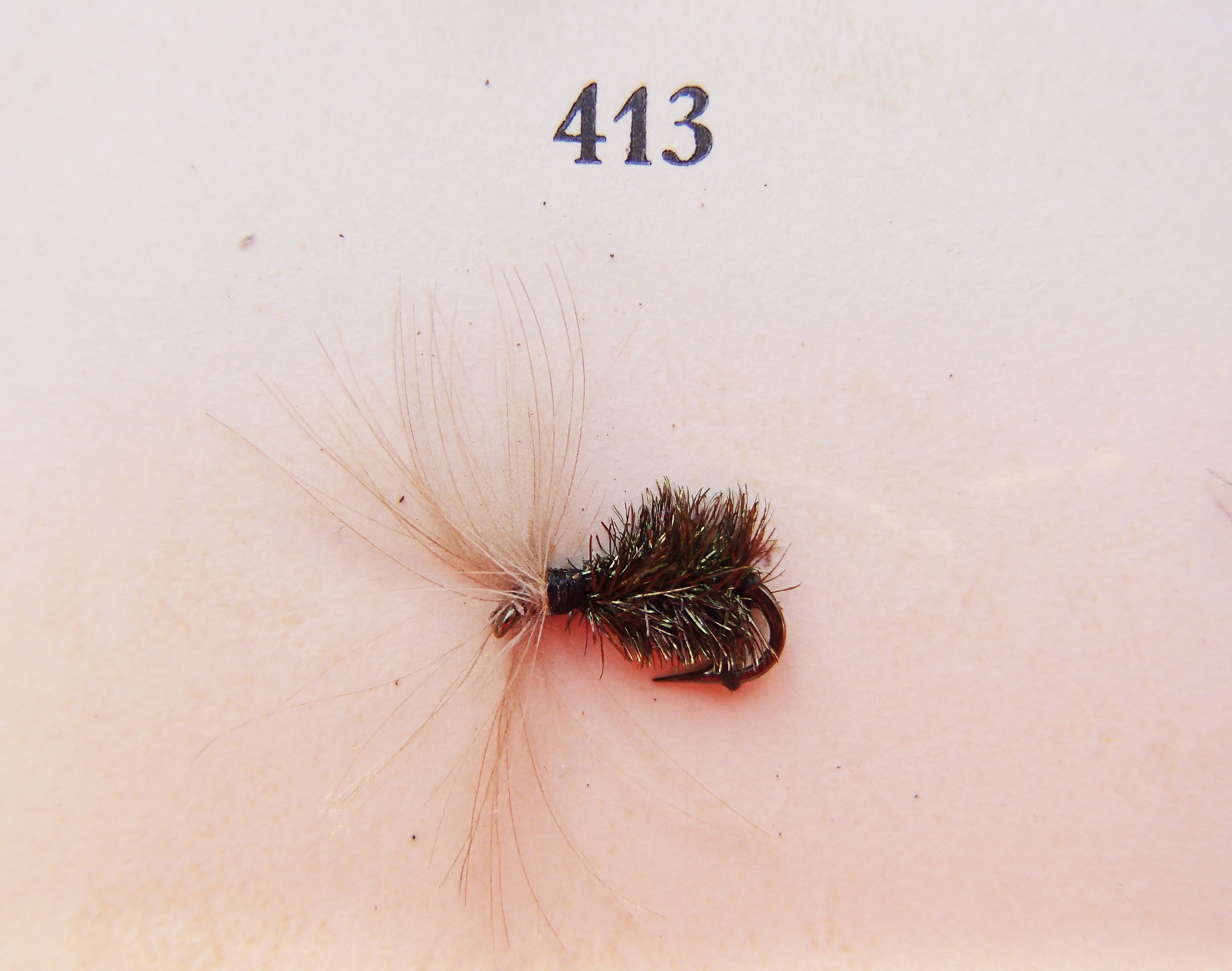
| Bickel 413: The beetle Black tying thread, peacock feather body. An absolute summer hit in meadows and mountain streams, and of course convincing in mountain lakes. | |

| Bickel 414- La NOIRE- the Black CDC Thread black, body black fine yarn, CDC natural grey- brown The black Bickel actually works everywhere and at all times. But it's at its best exactly where the inventor hardly thought of it: Unbeatable CDC in a mountain lake! | |
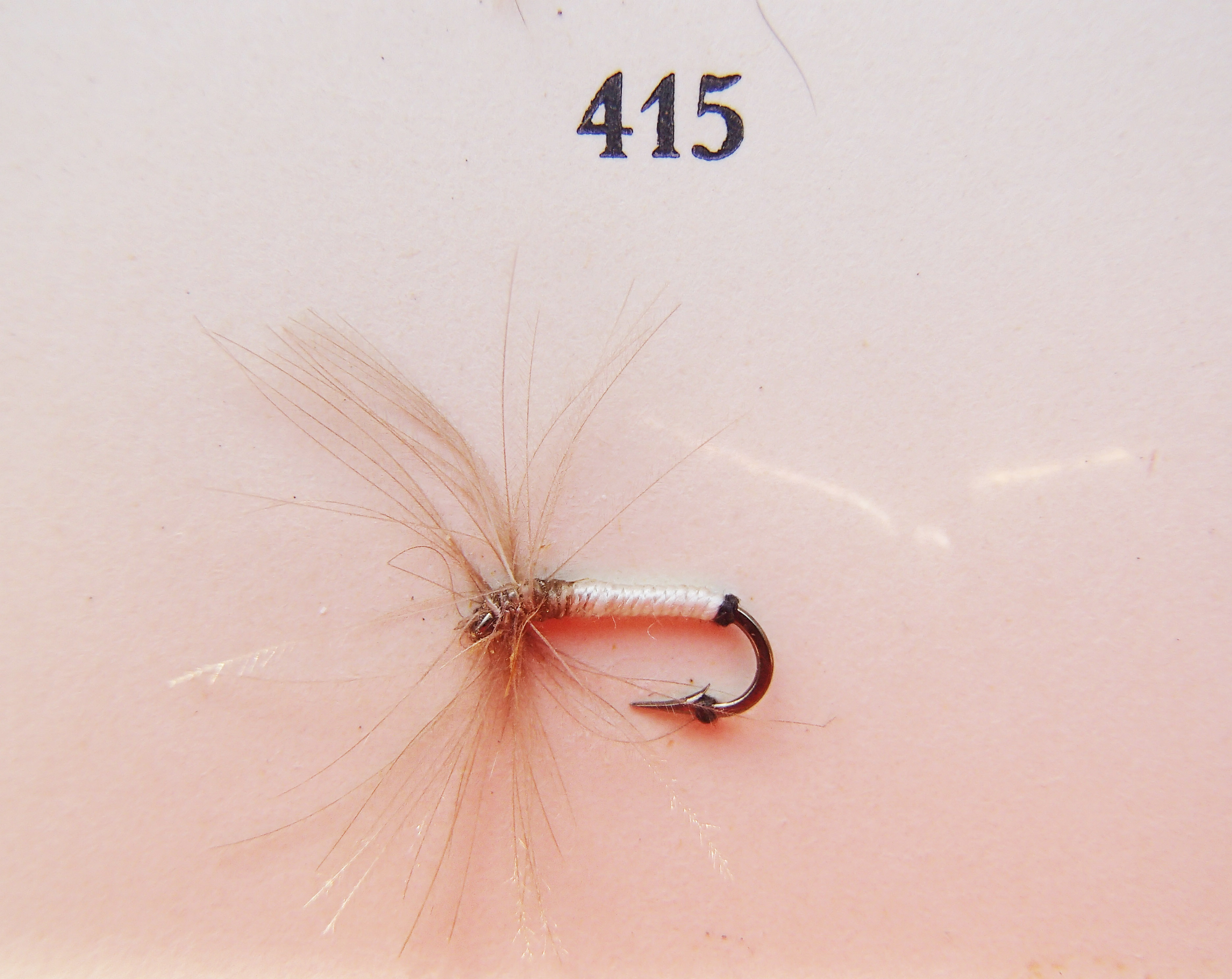
| Bickel 415: La Blanche - the White CDC Light brown fine tying thread, slim body made of plain white cordonet, CDC natural grey Top summer evening fly for grayling and trout, highly visible. | |
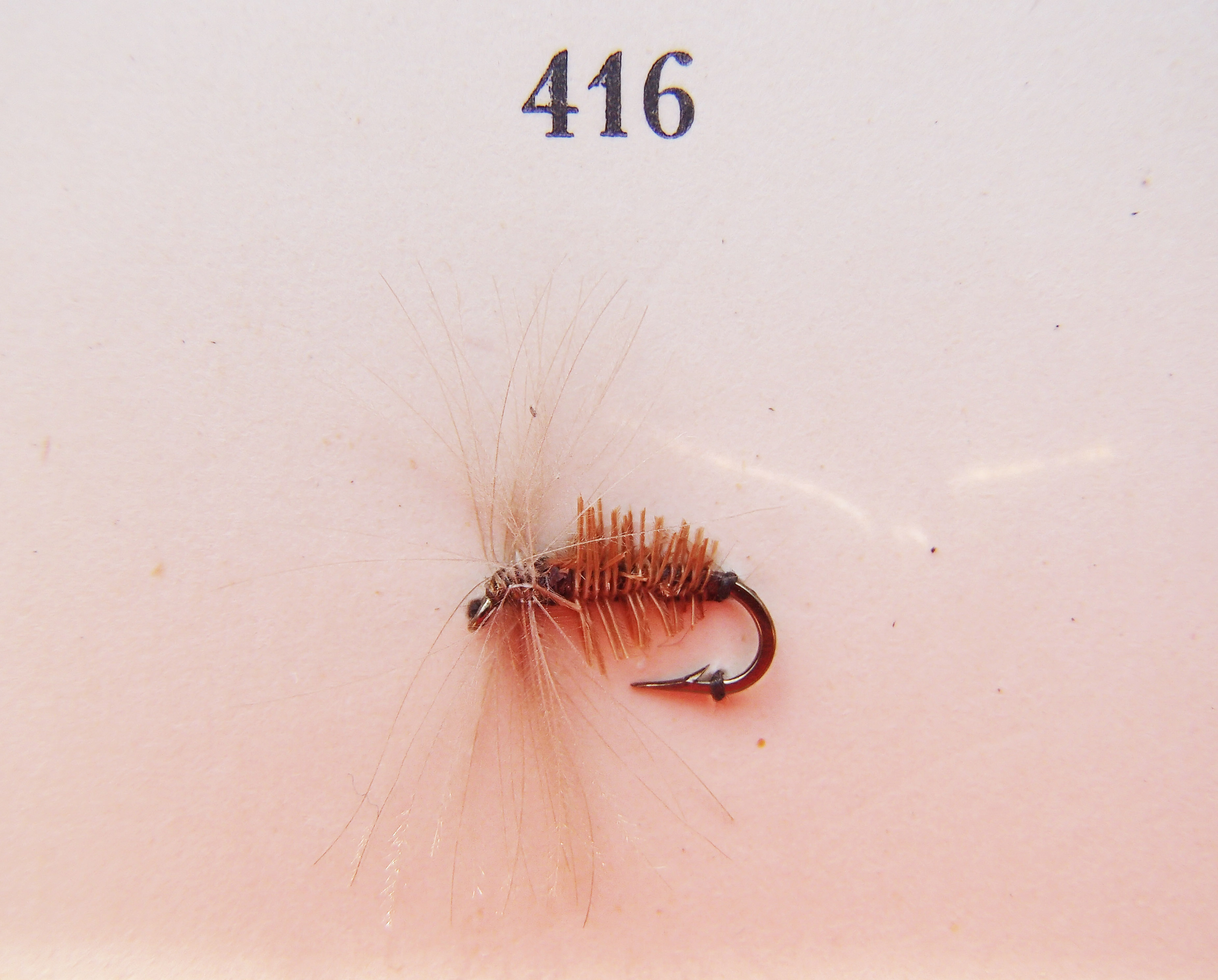
| Bickel 416: "Hedgehog" CDC. Black tying thread, body made of brown hackle, wound around shank over a black body and then cut short Natural - CDC feathers grey Ideal fly for imitating small beetles falling in the water. Very good along overhanging tufts of grass in summer and late summer. | |

| Bickel 417: La Brune- the Brown CDC Thread dark brown or black, body brown fine silk thread, CDC natural grey- brown I like to fish with the brown in summer, even in small streams, under bushes. It's also an insider tip for tricky grayling until November. | |
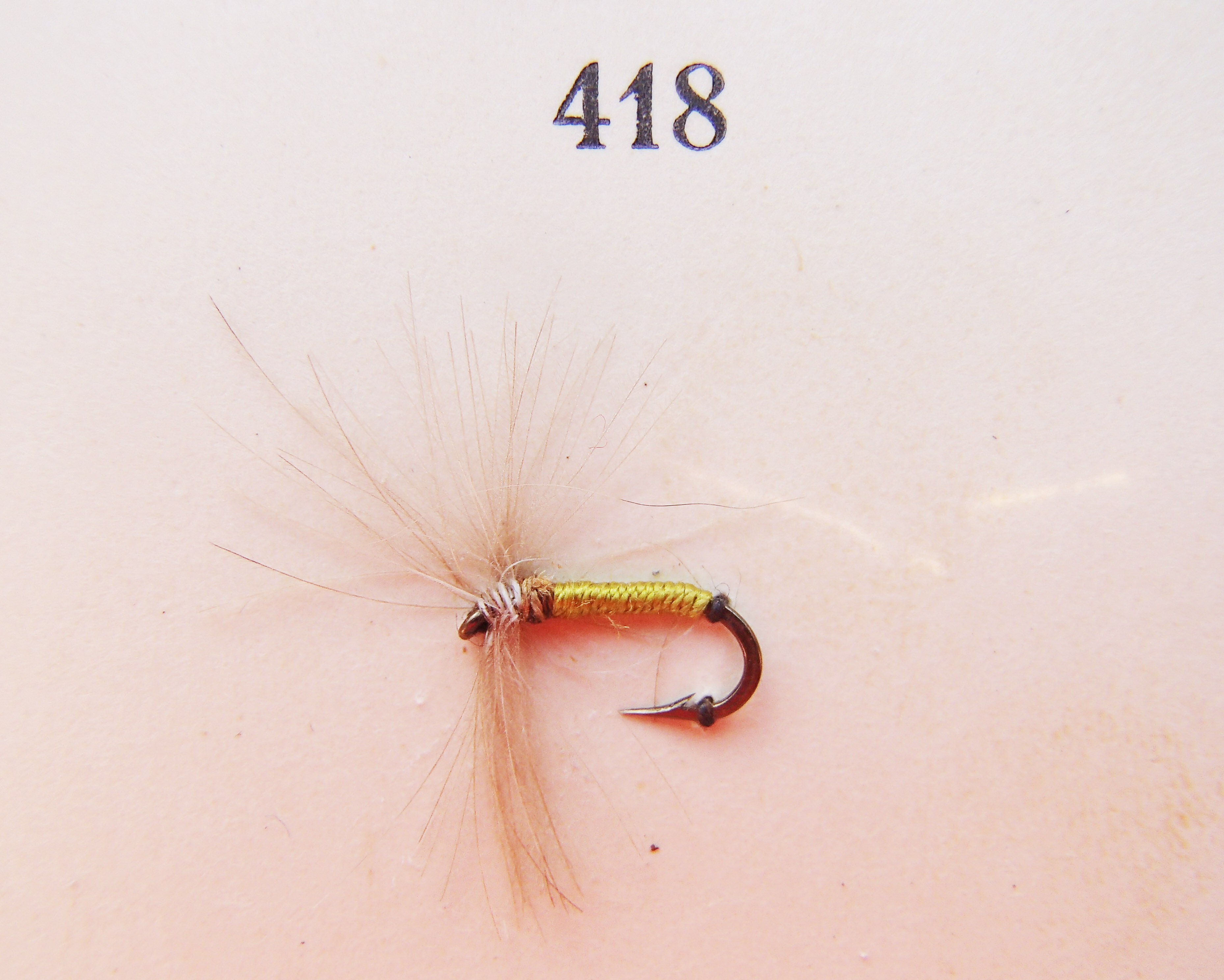
| Bickel 418: L'Olive Thread light brown, body yarn light olive (similar to 407), CDC natural light grey- dun The 418 is successful when the Olives are flying, i.e. from Mai until the end of October. In autumn excellent for grayling. | |
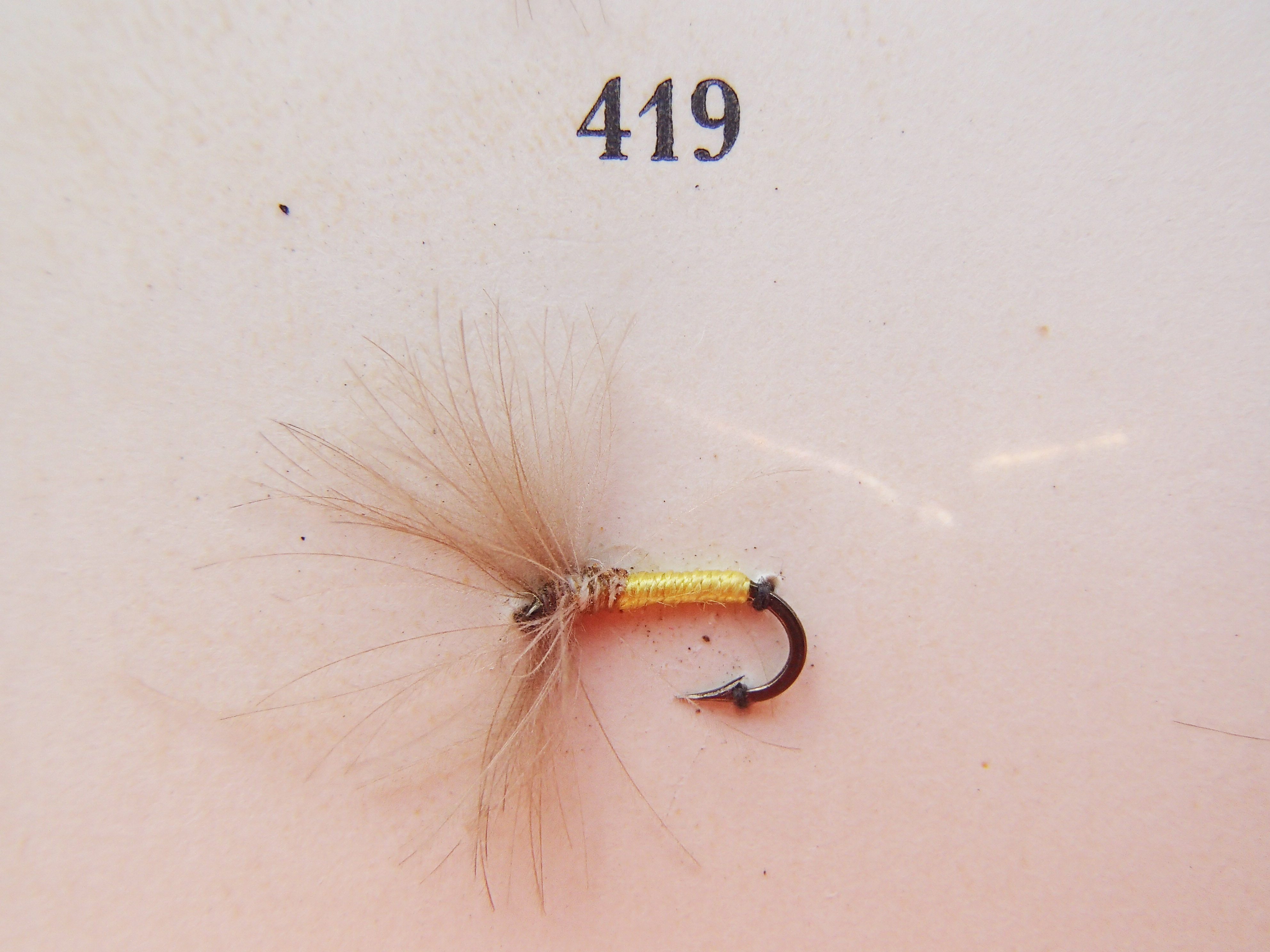
| Bickel 419: La Jaune- the Yellow Light brown tying thread, yellow yarn body, natural CDC feathers beige-brown. Very effective to imitate yellow mayflies and small yellow stoneflies. Standard pattern when trout and grayling become finicky. | |

| Bickel 420: Blanche du soir Light brown fine thread, relatively fat body made of white silk floss, CDC natural cream | |
|
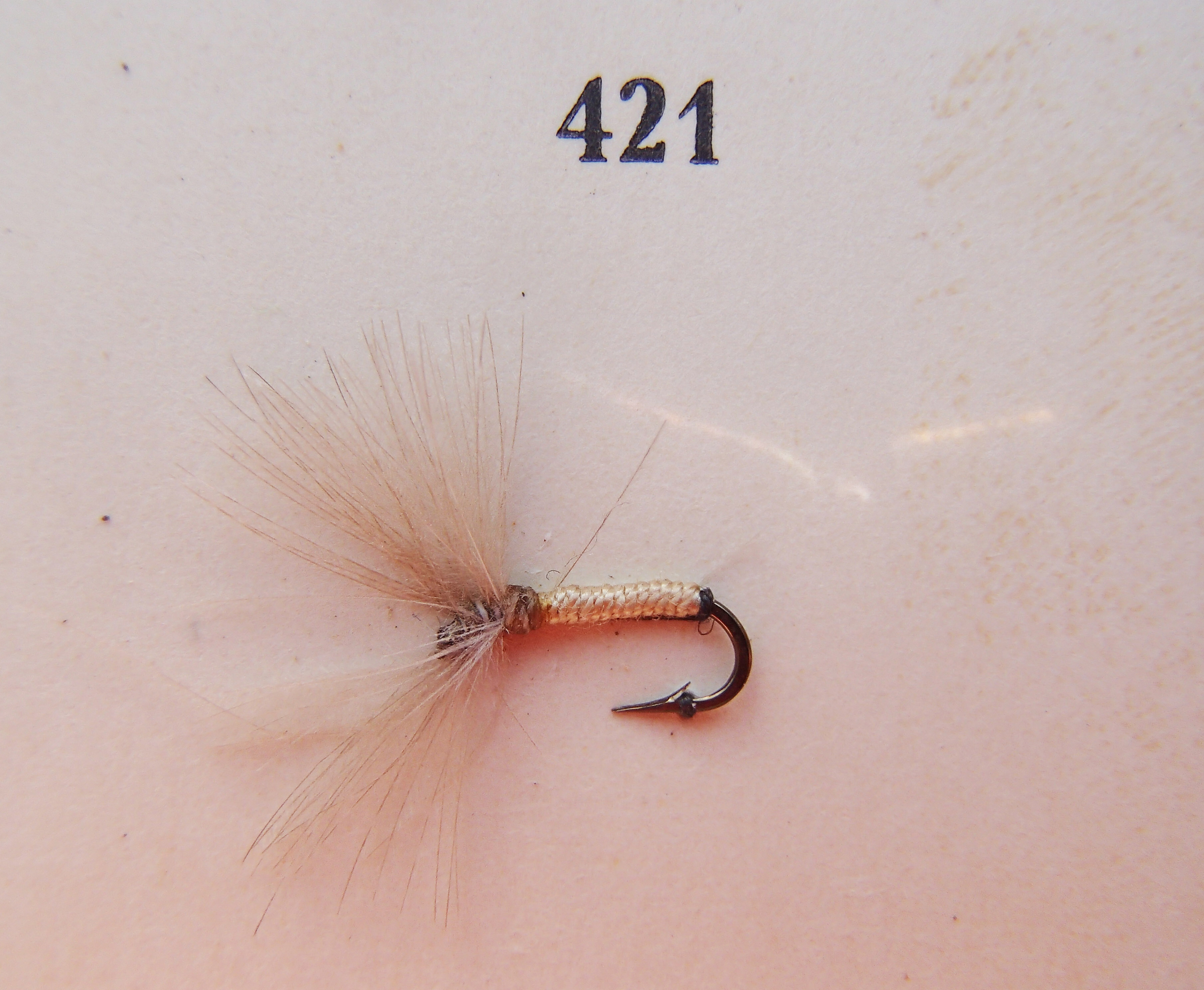
Bickel 421- Ivoire Light brown fine thread, slim body made of ivory yarn thread, CDC natural cream Very good summer and autumn fly for grayling. | |
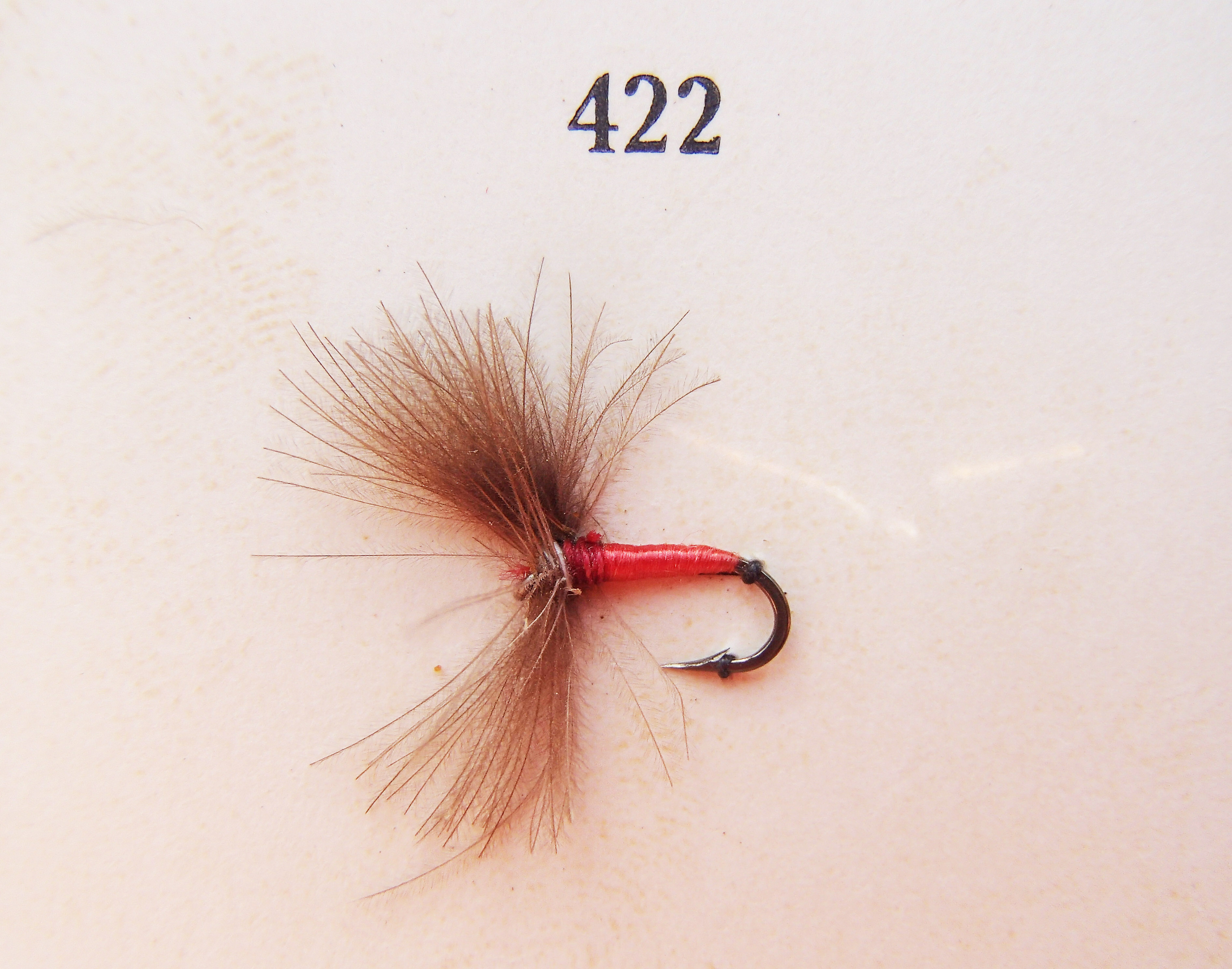
| Bickel 422: La Rouge Light brown fine thread, fat body made of red silk floss, CDC natural brown | |
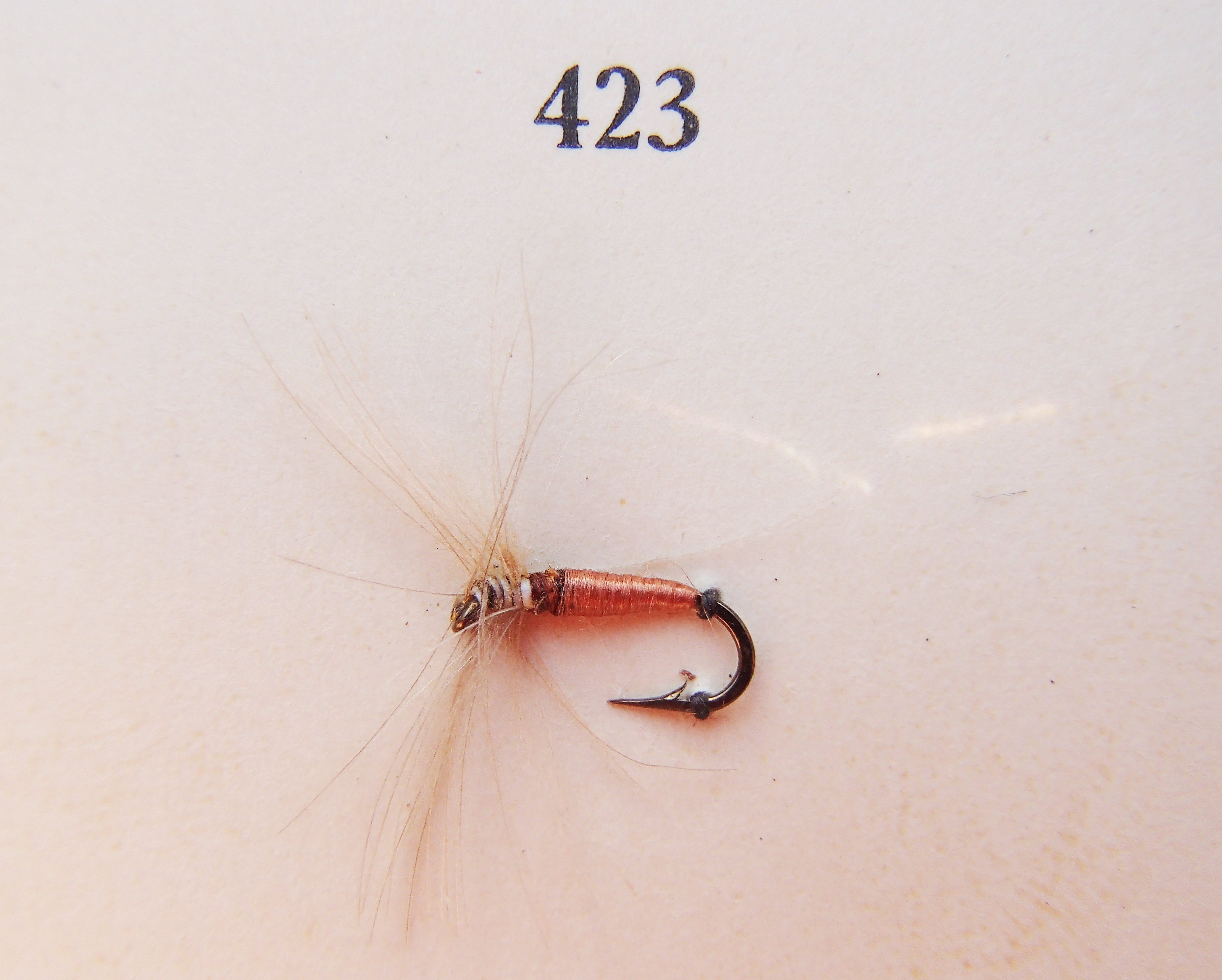
| Bickel 423: Lit de vin Brown fine thread, body vine colored silk floss, CDC natural grey >From mid-August onwards, the 423 is ideal for catching wary fish in slow currents, even in rainy weather. | |
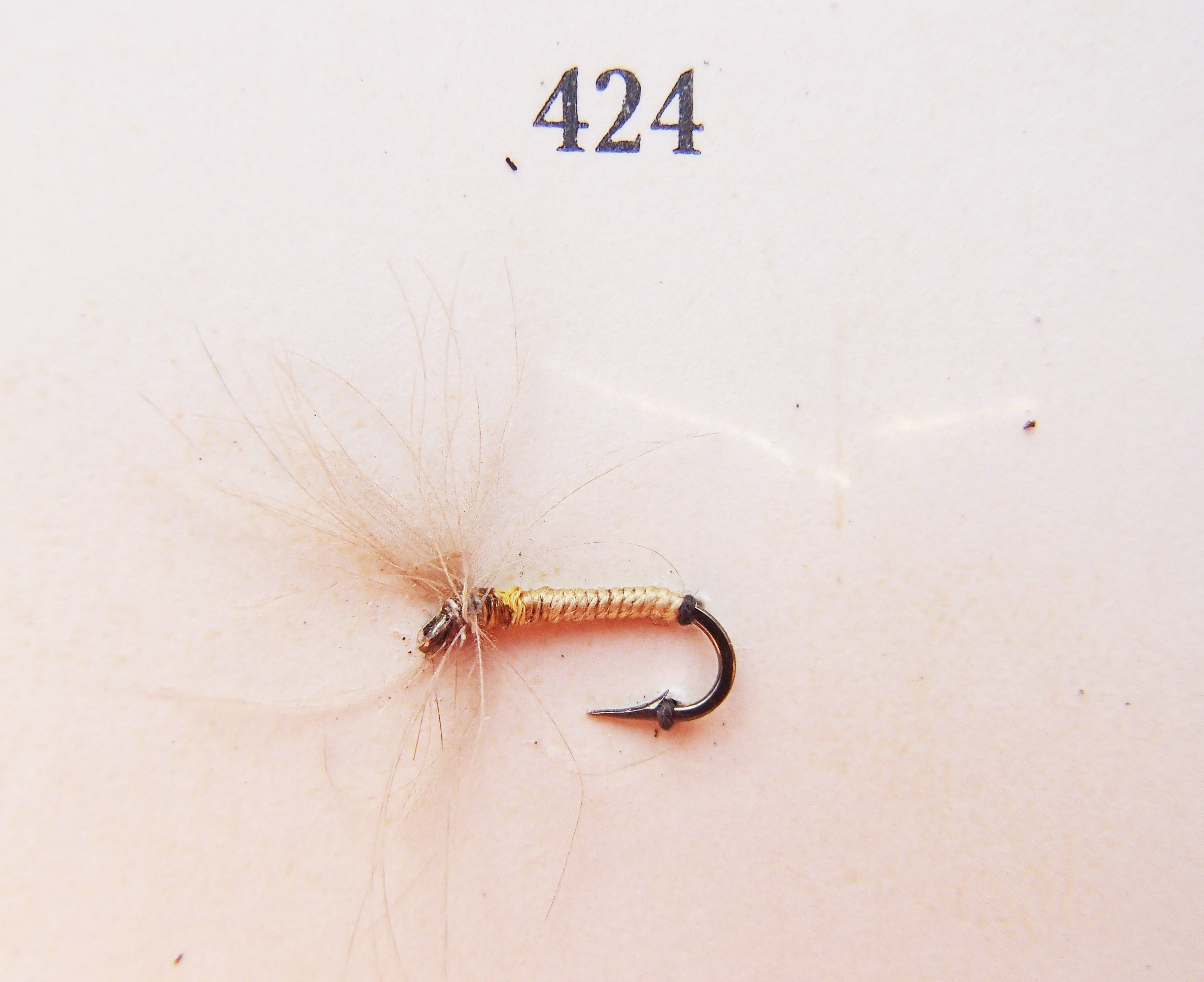
| Bickel 424: Crème à Café- Coffee Cream CDC Light brown tying thread, thin body made of beige silk thread, natural CDC feathers beige Reliable grayling and trout fly from June onwards. > | |
Swissflies offers remakes with original materials but tied on modern barbless hooks
Did you like what you have seen?
Swissflies is a non- profit company. All profits will be used for the benefit of our fly fishing by financing projects and political work to save our beautiful rivers and creeks. We further invest in the purchase and preservation of historic Swiss flies.
We appreciate your donation for this purpose.
Coming soon: more fly patterns from Mouches de Vallorbe (we have more than 3000 further unpublished historic fly patterns- a lot of work to do).
|
Copyright Swissflies - Swiss historical flies. Webdesign Swissparadigm // |
 Schweizer Fliegen – Mouches Suisses – Swiss Flies
 . This is therefore the first mention of what is now called "cul de canard" (CDC)
 Swissflies in facebook